
The method where the hypnotist stops deciding.
Ines Simpson built a protocol that hands the session over to the client's own mind. You do not need to know the problem. You do not analyze it. You ask, and you follow. Taught by the man she named as her successor.
- Six live sessions
- 30 hours of video
- Online
- No prerequisites
- $1,800
You are guessing. You have always been guessing.
Every method you have learned rests on the same hidden assumption: that you can work out what is actually wrong.
The client tells you it is the fear of flying. You take that at face value, because what else can you do, and you build the session around it. Sometimes you are right. Sometimes the fear of flying was never the point, and three sessions later you are both politely pretending otherwise.
And then there are the ones who cannot tell you at all. The client who goes quiet when you ask what brought them in. The one who says "I would rather not go into it" and means it. Most practitioners lose those clients, not because hypnosis cannot help, but because the method they were taught requires the client to speak first.
Your judgment is in the room
Your assumptions, your training, your idea of what this person needs. All of it shapes the session, and none of it is theirs.
Shame stops the work before it starts
Some things a person will not say out loud to a stranger. Not in session one, not in session ten. That is not resistance, that is being human.
Depth is where the field stops
Most training treats the deepest states as a curiosity, because nobody could work in them. So an entire level of the mind stays off limits.
This is where the Simpson Protocol lives now.
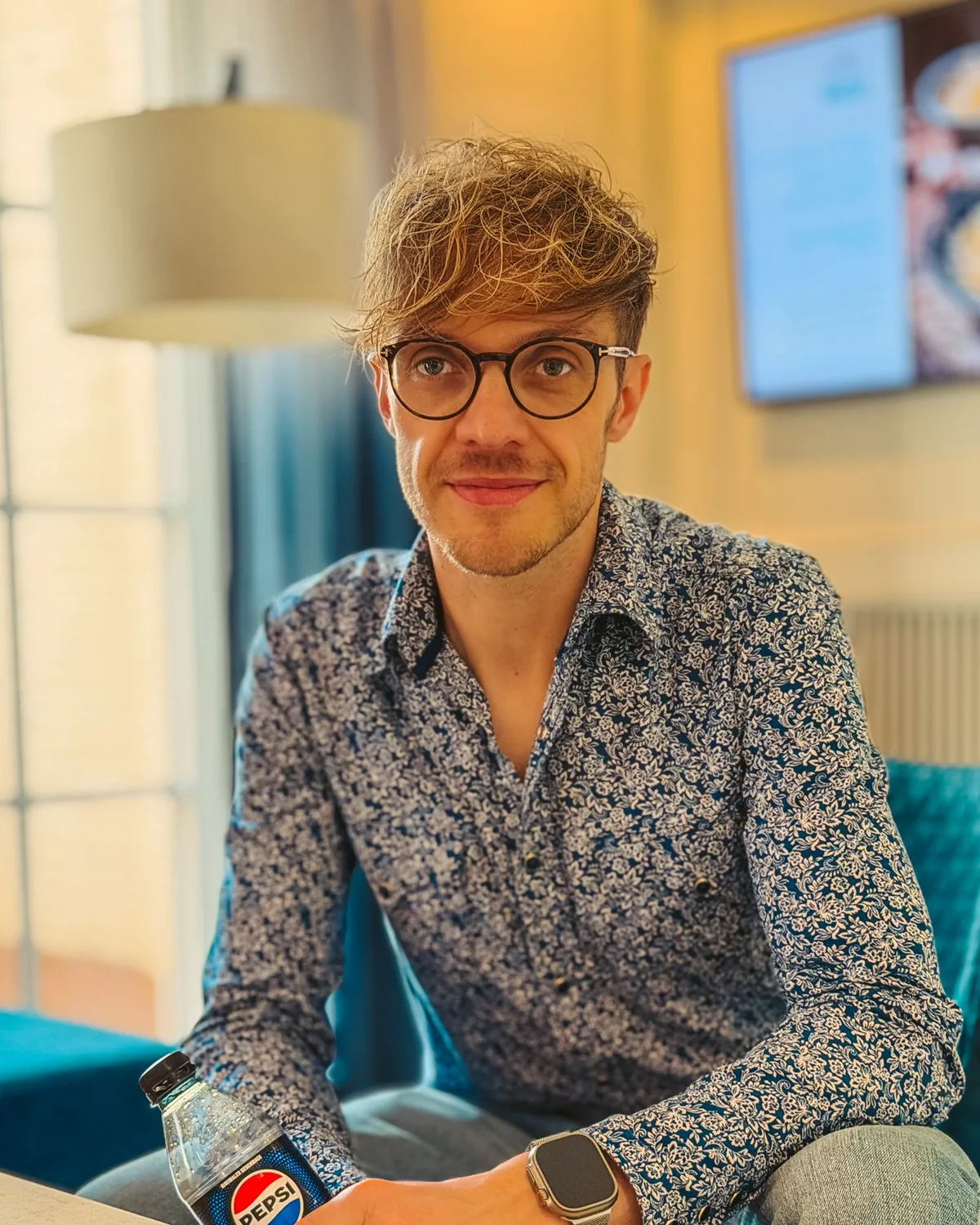
Stin-Niels Musche worked alongside Ines Simpson from 2013 onward. He did not learn the protocol from a manual, he learned it beside the woman who developed it, over more than a decade.
Today he is her named successor. He holds the worldwide rights to the Simpson Protocol and owns the trademark. What you learn here is the method as she taught it, carried forward by the person she chose to carry it.
What actually happens in a session
The client goes into a very deep state of hypnosis, the one James Esdaile documented in India in the nineteenth century when he operated on patients without chemical anesthesia. For most of hypnosis history that state was considered a dead end: the person was too far down to work with.
Simpson's contribution was a way to communicate from inside that state. The client answers through ideomotor signals. You ask, they respond, and the direction of the session comes from them rather than from your assessment of their problem.
There is no script and no formula. There is a sequence of questions, and what the client's own mind does with them.
The client never has to say it out loud
You need to know that something is there and that they want to work on it. Not what it is. For anyone who has ever sat across from a client who could not get the words out, this changes what is possible in the room.
Your judgment stays out of it
You are not deciding what the issue really is, which technique fits, or what the person needs. That is the part most methods get wrong and the part this one removes by design.
Depth in minutes, not days
Esdaile spent up to ten days conditioning a patient. The protocol gets there in a few minutes, and gives you ways to verify that you are actually there.
Several things in one session
Because you are not working through one problem in sequence, sessions often move across more than one topic. Clients typically need one or two, not twenty.
What a session looks like once you have this
You stop needing the story
A client sits down and says almost nothing. You work anyway, properly, and both of you know something moved. That alone opens a group of clients most practitioners never reach.
Sessions get shorter, not longer
Because the direction comes from the client rather than from your hypothesis, you are not spending three appointments finding the right door. Most people need one or two sessions, not a package of twelve.
You work at a depth almost nobody offers
The Esdaile state is not exotic in this work, it is the normal working level. You can verify you are there, and you know what to do once you are.
The pressure comes off you
You are no longer the one who has to be right about what is wrong. For a lot of practitioners that is the single biggest relief this method brings.
What you learn across the six sessions
Foundations
- The philosophy behind the protocol
- The concept of the superconscious
- The intake conversation that sets a session up
- Deepeners: beach, ABC
- Convincers, including the ice cube
- The Esdaile state and how to verify it
Working with it
- Regression inside the protocol
- The change process itself
- Parts work
- Inner child work
- The different levels the protocol can access
- Checking whether the work actually landed
Depth and supervision
- Taking clients past the Esdaile state
- Cases that look like dead ends
- Exercises for your own intuition
- Questions to the higher levels of mind
- Live supervision on your own sessions
Practice runs through all of it. You will be working with other students in every session, not watching demonstrations.
Included in your access
- Preparation material before the first session
- A private portal with the full video library
- Recorded sessions, start to finish
- Video course on the Dave Elman induction
- Video guide to EFT
- A recorded intake conversation you can use with your own clients
- Ines Simpson speaking about the philosophy behind the protocol
- A Simpson Protocol audio program
Advanced modules
The protocol has extensions that go into spiritual territory: work in the bardo state, forgiveness work at the soul level, the chakra system, past life material, and surrogate sessions for people you cannot work with directly.
We name these plainly rather than hiding them. They are part of what Ines developed and part of how many practitioners use the method. Whether you go there is your decision, and the core certification does not depend on it.
Who this is for
This is for you if
- you already practice and want to work at a depth most training never reaches.
- you keep meeting clients who cannot or will not describe their issue.
- you are tired of being the one who has to figure out what is really going on.
No prerequisites. Complete beginners can take this, and Ines built it so that they could. If you have never hypnotized anyone, the free HypnoCampus material is a sensible place to start first.
This is not for you if
you need to understand a client's problem in order to feel useful. This method takes that away from you on purpose, and some practitioners find they do not want to give it up.
It is also not for you if you want a technique you can bolt onto what you already do. This is a different way of running a session.
What people think before they enroll
"Superconscious? Really?"
It is the term the protocol uses for the part of the mind it addresses. Whether you take that literally or treat it as a working model does not change what happens in the session. We are not going to tell you we can prove what it is, and you should be suspicious of anyone who does.
"I cannot get people that deep."
Most practitioners cannot, before this. The protocol includes a route to the Esdaile state in minutes rather than the days Esdaile himself needed, plus ways to verify you are actually there rather than hoping.
"Another certification I will never use."
Fair. The difference here is that this is not a technique you bolt on. It replaces how you run a session, which means you either use it constantly or not at all. Read the "not for you" section above honestly before you decide.
What you get
- Live sessions with Stin6
- Video library on the private portal30 hours
- Recorded sessions, start to finishincluded
- Dave Elman induction video courseincluded
- Ines Simpson on the philosophy of the protocolincluded
- Simpson Protocol audio programincluded
- Certification from the holder of the methodincluded
Six live sessions, 30 hours of video, portal access, certification.
Certification is issued by Wisdom Heroes and documents completed training. It is not a state license and does not authorize the practice of medicine, psychotherapy or any other licensed profession. Nothing here is medical treatment or a diagnosis.
Questions people ask
What is the Esdaile state?
A very deep state of hypnosis, documented by the Scottish physician James Esdaile in India in the mid nineteenth century, before chemical anesthesia was available. He performed surgery with it. Traditionally people in that state could not or would not speak, which is exactly the problem the Simpson Protocol solves.
Do I need hypnosis experience?
No. The protocol was built to be learnable by beginners as well as experienced practitioners. That said, if you have never run a session, start with the free HypnoCampus material so the vocabulary is familiar.
What is the superconscious?
The term the protocol uses for the part of the mind it addresses, sometimes described as the higher self. Whether you treat that as a literal description or as a working model is up to you. The protocol works the same either way, and we are not going to tell you we can prove what it is.
How does it run online?
Six live sessions plus around 30 hours of video you work through on your own schedule. Hypnosis needs clear communication rather than physical presence, and most professional Simpson Protocol work happens online today anyway.
Who issues the certificate?
Wisdom Heroes. Stin-Niels Musche holds the rights to the Simpson Protocol and the trademark, so certification comes directly from the source of the method.